Six million donkeys killed every year for traditional Chinese remedy
Future of Africa’s donkeys rests on slaughter ban decision at African Union Heads of State Meeting...
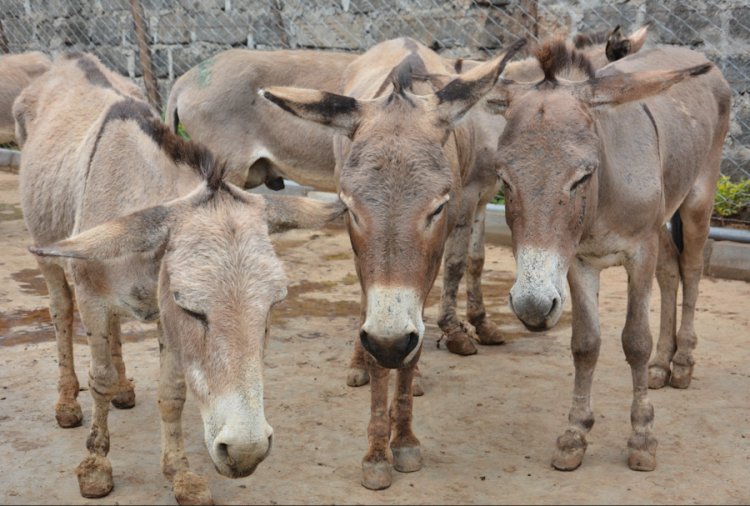
Donkeys at the Goldox slaughterhouse in Baringo, Kenya. Credit: The Donkey Sanctuary
-
African Heads of State will determine the fate of donkeys across the continent at the upcoming African Union Summit on 17 & 18 February, 2024, as nations consider a pan-African moratorium on the slaughter of donkeys for their skins.
-
International animal welfare charity, The Donkey Sanctuary, has published new figures which reveal at least 5.9 million donkeys are slaughtered each year, in a report which includes recommendations for governments and industries involved in the skin trade.
-
Production of ejiao, made using collagen from the skins of dead donkeys and marketed as a luxury product, doubled in five years and is driving the increase in donkey slaughter.
-
A bill banning the slaughter of donkeys and horses is expected to reach Brazil’s National Congress in 2024.
At least 5.9 million donkeys are slaughtered every year to meet escalating demand for the traditional Chinese remedy, ejiao, according to new figures published today by international animal welfare charity, The Donkey Sanctuary.
Following the rapid decline of China’s own donkey population for this reason, agents for the ejiao industry are looking elsewhere to keep pace with demand, targeting vulnerable donkeys and their owners in countries across Africa and around the world.
In response to the existential threat facing donkeys in Africa, Heads of State and Government are expected to endorse a report which recommends a continent-wide ban on the slaughter of donkeys for their skin. The final ratification of the report will be announced during the 37th African Union Summit on 17 and 18 February, marking a pivotal moment in the ongoing efforts to protect donkeys and the communities that rely on them.
On the other side of the Atlantic in Brazil, where donkeys are also trafficked and killed for the skin trade in large numbers, a bill to ban the slaughter of all equids is expected to pass the National Congress in 2024.
Researchers at The Donkey Sanctuary used previously published statistical modelling, together with the most recent production figures from the ejiao industry, to give an up-to-date estimate of the number of donkey skins needed to keep pace with escalating demand. The figure of 5.9 million represents their most conservative estimate and is projected to reach 6.7 million by 2027.
The new figures are published in a high-level briefing document which sets out, for the first time in one place, comprehensive recommendations for the industries and governments which have the power to help bring an end to this cruel and unsustainable trade.
Marianne Steele, CEO of The Donkey Sanctuary, said: “The slaughter of six million donkeys every year is an animal welfare disaster. Donkeys are a lifeline to people living in some of the most challenging environments on earth where the loss of a donkey can be the difference between modest survival and destitution.
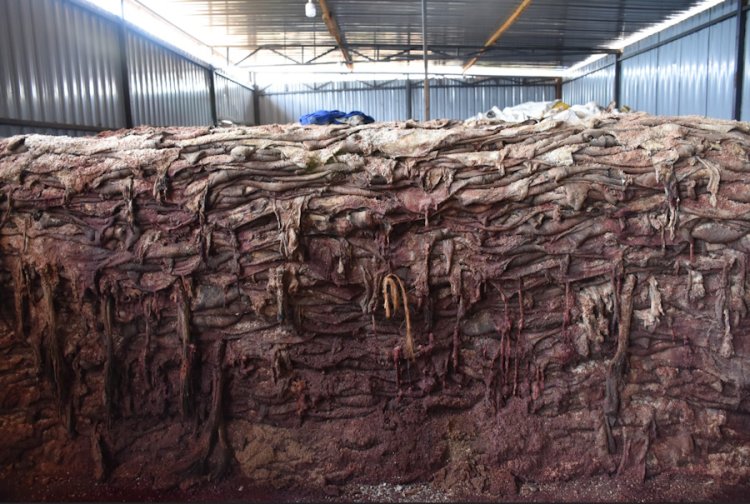
Skins drying at the Star Brilliant slaughterhouse in Naivasha, Kenya. Credit: The Donkey Sanctuary
“Donkeys have been invisible in political debate for too long. For this issue to have reached the highest levels of decision-making in Africa and Brazil, recognises the scale and brutality of the skin trade, and the vital role of donkeys around the world.”
Dr Faith Burden, Executive Director of Equine Operations and Deputy CEO of The Donkey Sanctuary, said: “These new figures are shocking, even to those who were already aware of the skin trade. Donkeys suffer at every stage of the trade - from being taken, transported long distances and held, often terrified and in overcrowded conditions, before being slaughtered and discarded after their skins have been removed.
“Donkeys are intelligent and sentient animals who deserve protection in law. A ban on their slaughter and export across Africa and Brazil would represent a huge win for donkey and animal welfare and for the many millions of people who depend upon them.”
Dr Calvin Solomon Onyango, Director of The Donkey Sanctuary in Kenya, said: “Here in Kenya we see first-hand the devastating impact of the donkey skin trade. Not just the horrific treatment of these gentle animals, but also the effect it has on women, children and the communities who rely on donkeys for their social and economic lives.
“The skin trade is inflating the price of donkeys here in Kenya and across Africa, making it very hard for families to replace an animal after it has been sold or stolen. Agents working for the ejiao industry persuade people, already living on the brink of poverty, to sell their animals for short-term gain. The reality is the long-term loss of livelihood, and eventually, the loss of a way of life for many communities.
“The destructive impact of the trade has led the governments of countries including Kenya, Nigeria and Tanzania, to outlaw donkey slaughter. However, the demand is such that we now see the emergence of illegal bush slaughter, with hundreds of donkeys taken or stolen and slaughtered for their skin.
“There is a strong will among governments to protect their donkey populations and the citizens who rely on them. We are therefore hopeful that Africa’s Heads of States will ban the slaughter of donkeys for their skins, across the continent. Based on what we have seen here in Kenya, if the exploitation of donkeys continues at this rate, in another three to six years, donkeys could be joining rhino and elephants as an endangered species in Africa.”
The Donkey’s Sanctuary’s campaign to Stop the Slaughter is the single biggest donkey protection initiative the charity has undertaken in over 50 years of operation. Those who want to support the campaign can sign up to receive regular updates, and any donation made will support work to improve the welfare of donkeys everywhere, including this campaign.
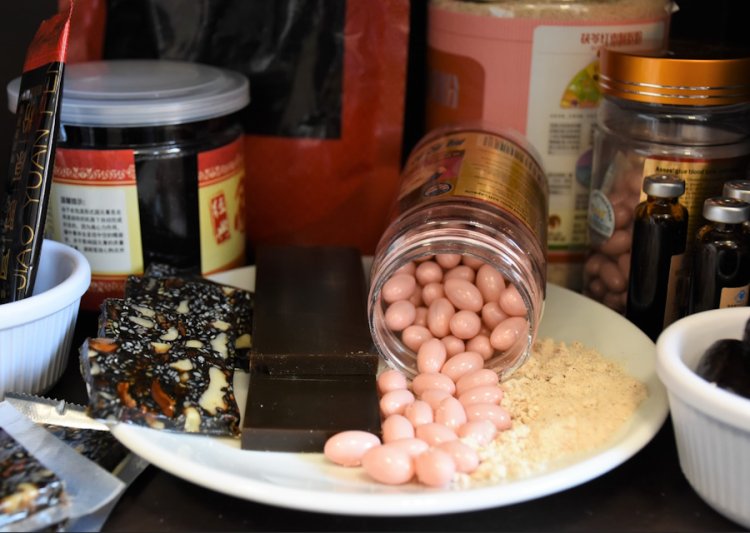
Ejiao products. Credit: The Donkey Sanctuary